

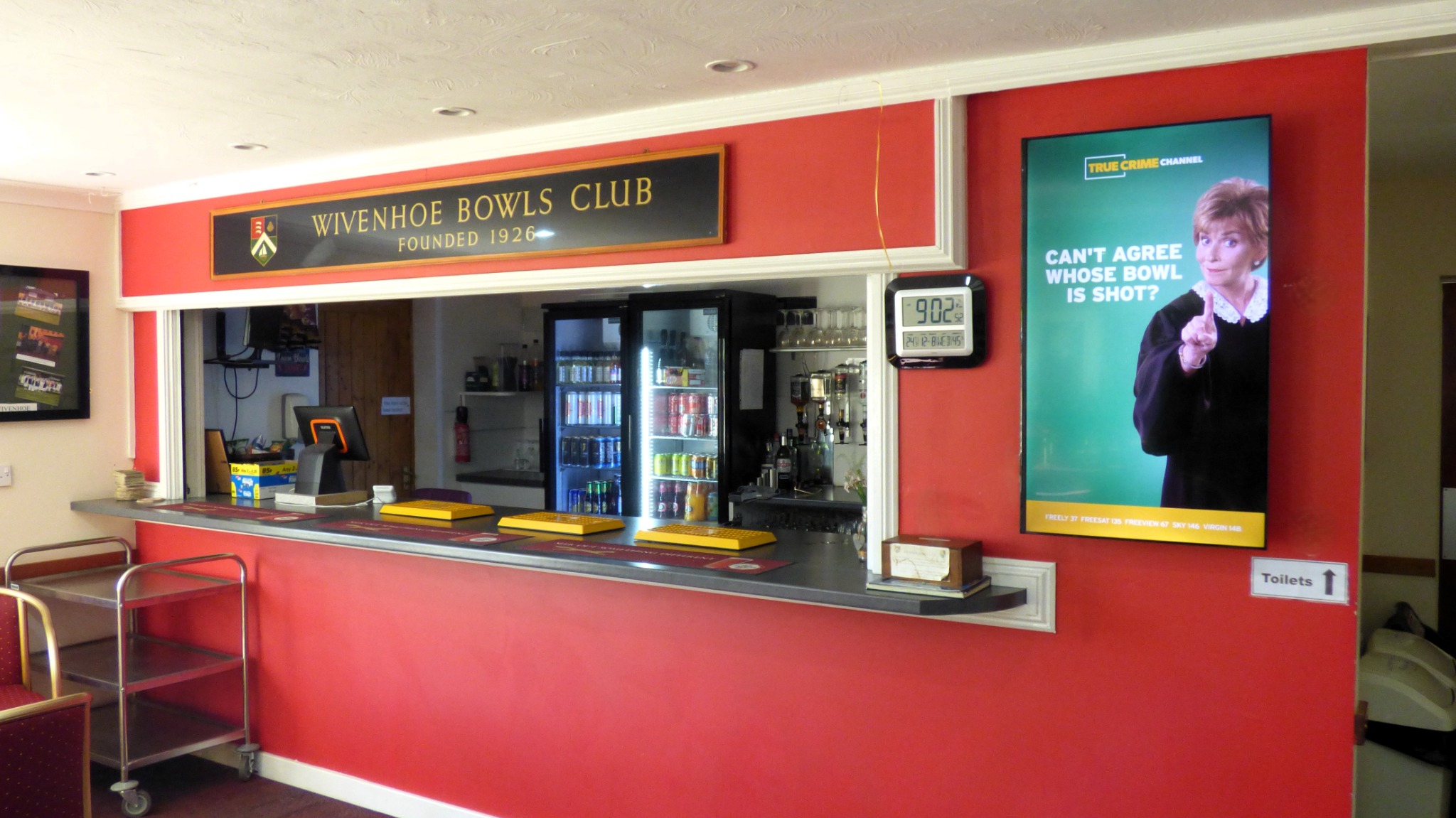
“Can’t agree whose bowl is shot?” Put that line beside Judge Judy inside a bowls club and the connection is immediate. A familiar sporting disagreement meets a familiar television authority on settling disputes.
It is one of the TRUE CRIME executions we have been running across our bowls network, alongside “Jack’s the target. Justice is the goal.” and “Order on the Green”. We wrote about those executions recently.
What interests me now is the planning question behind them: how do we give more campaigns the opportunity to use their surroundings this well?
“The location contributes to the meaning. The environment completes the idea.”
Bring the room into the brief
By the time artwork reaches a media owner, many creative decisions have already been made. The campaign idea is approved, the headline is settled and the remaining task is to supply the right dimensions.
That can be entirely appropriate. A strong existing execution may need nothing more than a careful adaptation for the format.
But there is a useful question to ask earlier: what could this idea do in the place where it will actually appear?
A creative team given “sports audience” has one starting point. Give the same team photographs of the clubhouse, the position of the screen, the purpose of the room and the occasions when people use it, and they have much more to work with.
They can consider the conversation, the routine and the physical surroundings alongside the audience profile.
Who will see it, and what will be happening around them?
An audience description helps establish who a campaign needs to reach. Context adds another layer: what those people may be doing when they encounter it.
Even within one club, that can vary. A changing room before a match, a lounge after training and a bar showing live sport each suggest a different moment. The same person can use all three spaces with different things on their mind.
We cannot know what every individual is thinking. We can understand how a venue is used and build a more informed creative brief around it.
That is where working directly with clubs matters. It gives us a way to check an idea against the practical reality of the place: where the advertising sits, who uses that space and whether the proposed reference makes sense there.
Audience planning helps us decide who should see the campaign. Contextual Creative asks whether the place itself can help the idea work harder.
Start with the brand idea
The Judge Judy example connects something recognisable about the programme with something recognisable about bowls. Both sides of the connection matter.
A useful contextual adaptation should still communicate the brand, product or programme clearly. Adding a sporting pun has little value if it makes the offer harder to understand.
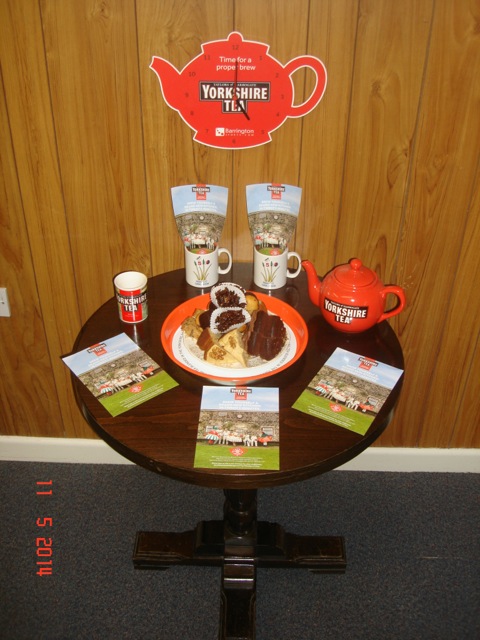
Sometimes the opportunity is in the occasion itself. Our historical Yorkshire Tea campaign used cricket changing-room posters, with campaign photography also showing leaflets around club refreshments. Tea had a natural connection with the setting.
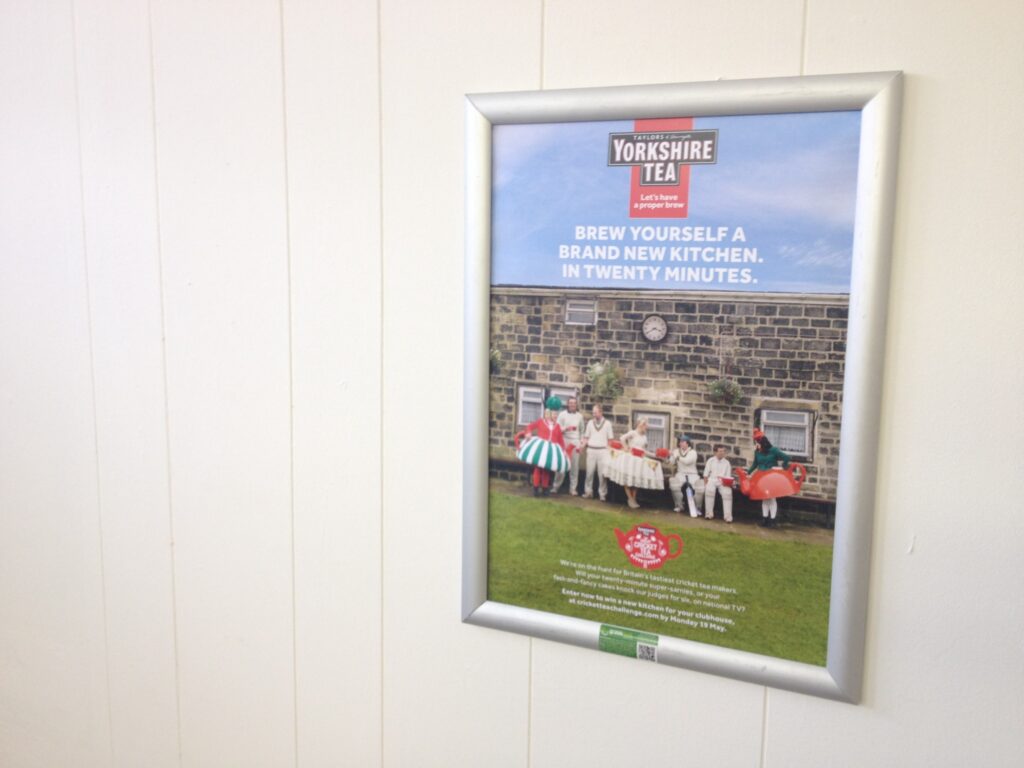
The published case study reports 81% prompted recall. That is evidence of the campaign’s performance, rather than a controlled demonstration of the effect of contextual creative alone.
For other briefs, there may be different opportunities. A grooming brand could explore the routine of getting changed after football. A broadcaster could connect its message with the discussion around a clubhouse television.
Those are potential directions to explore with a brand and its agency. The right choice depends on what the campaign needs to achieve.
What Grassroot Media brings to the creative conversation
We describe this contribution as Contextual Creative: specialist knowledge of grassroots sports environments that helps advertisers and their agencies assess how a campaign could work within them.
The brand and its agencies bring the strategy, creative idea and understanding of the wider campaign. We bring knowledge of the clubs, placements and sporting routines around the media.
A useful starting conversation would cover:
- The objective: what should someone remember, consider or do?
- The setting: which sport, room and occasion suit that task?
- The creative opportunity: could a change of line, image, sequence or timing add relevance while preserving the campaign idea?
- The practical delivery: will it be clear at the viewing distance, within the screen slot or on the poster?
Spending time in a clubhouse does not mean someone spends that whole time looking at an advert. The message still needs to be legible, recognisable and easy to follow.
Equally, every club should not be treated as interchangeable. Ideas involving staff, members or additional activity need to fit the host club and be agreed with it.
Decide what we want to learn
If we believe an adaptation will help, it is worth deciding at the outset how we could assess that.
For a suitable campaign, we could explore a comparison between standard and contextual executions in comparable club groups, with similar delivery and a consistent research method. The question might concern advertising recall, understanding of the message or a reported response.
That needs proportionate research design and enough responses to support a useful conclusion. Smaller campaigns may provide feedback and learning without supporting a claim of measured uplift.
Our approach is to connect the objective, environment, creative and delivery with proof and learning. A result should help inform the next decision.
Send us the brief before the artwork is finished
An early conversation gives everyone more options. We may identify a small adaptation worth exploring, a sporting occasion that suits the campaign, or reasons why the existing creative already does the job.
Got a campaign brief involving grassroots sport? Send it to us before the creative is locked. We can help identify opportunities within the club environment and work with your team to assess which are worth pursuing.
Contextual Creative
Got a brief? Talk to us before the creative is locked.
We can help identify where the club environment could add relevance and which ideas are worth pursuing. Already have artwork? Put it onto a real Grassroot Media clubhouse screen and see how it looks before you book.