

Public information has a practical job to do. But reaching the right demographic is only part of the plan. The place in which someone encounters the message can also affect whether it feels relevant, understandable and worth acting on.
A campaign might help someone understand a change to a service, consider a career or know where to find support. Choosing where that message appears deserves as much thought as deciding what it says.
Grassroots sports clubs can offer a useful setting. They bring people together around something they already choose to do, from playing and coaching to volunteering or catching up after a match. For the right brief, those routines give a campaign a reason to be there.
Start with the people and the purpose
A public-sector brief might cover a whole country or a particular service area. It might need to reach older adults, young people, families or the volunteers who keep community organisations running.
The starting point is to understand that task. Which participating clubs are relevant? When are those venues busy? What does someone need to understand, and what should they do next?
An individual sport is not a complete audience description. A cricket club can bring together junior families, adult players and volunteers. A bowls club may be useful for information relevant to older members and the people around them. The final selection needs to follow the brief and the available evidence.
Use the environment to make the message relevant
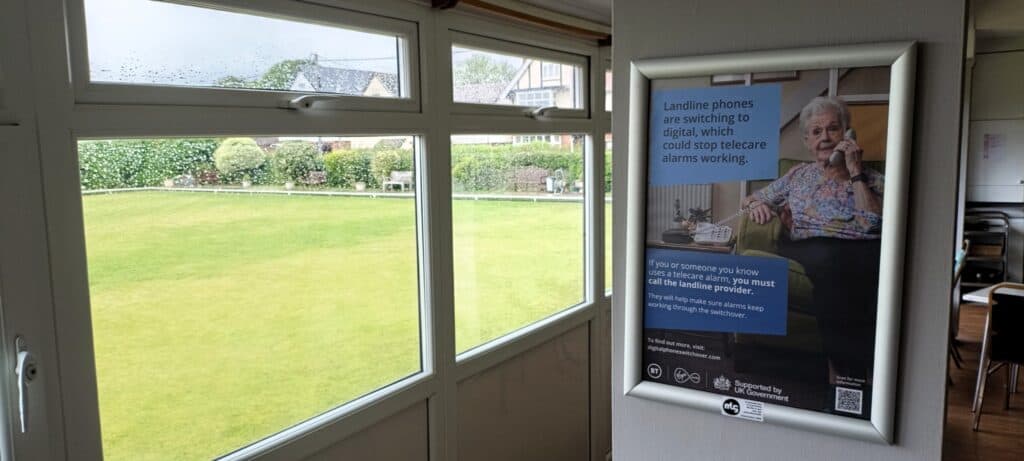
Our work has included government information about the digital landline switchover and telecare alarms, carried in bowls clubs. It is a practical example of considering where information could be relevant to the people seeing it.
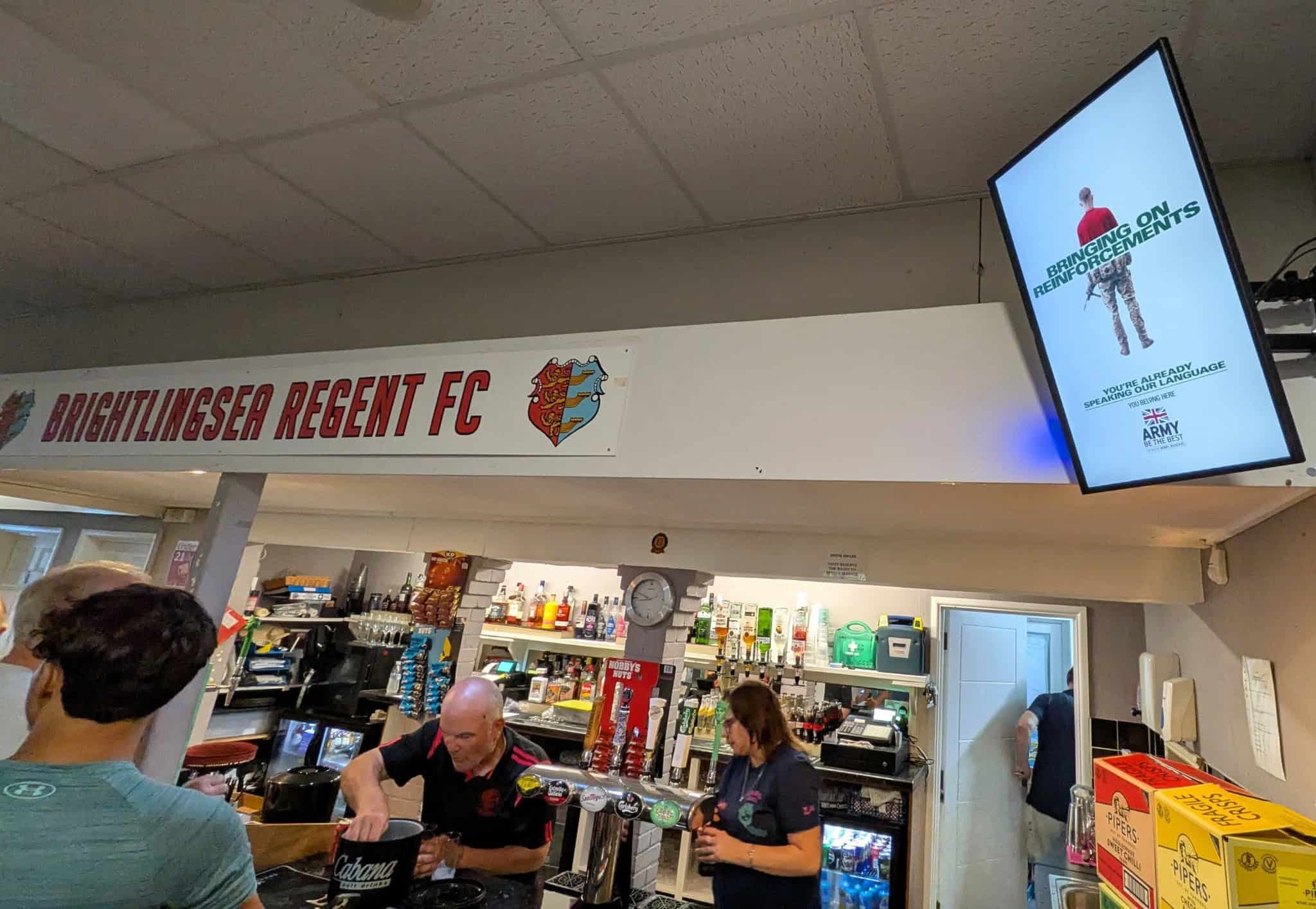
There is also a role for longer-term communication. Our British Army campaign combined posters and screens over seven months, with regular creative changes and weekly delivery reporting. That involved sustained campaign management as well as providing space.
Think about what happens after someone notices
Different formats can help with different steps. A clubhouse screen can introduce a short message. A poster can keep essential information visible. Where suitable and separately agreed with participating clubs, a leaflet can give an interested person something to take away or an appropriate club communication can reinforce the message.
Those additional elements are scoped separately and are not automatically included with screen or poster bookings. Clubs have their own priorities, and involving them early helps us understand what is practical.
Build the plan around geography, not just addresses
For a local campaign, geography needs the same care. We can assess participating venues against a council boundary or service catchment, but a club address does not mean every visitor lives within it. Understanding that distinction helps keep both the plan and its claims realistic.
Be clear about the evidence
Delivery records tell us where advertising appeared. Research can help us understand what people remembered or reported doing. Those are different questions, and both can be useful.
The published DCMS Team Up study offers one example of audience feedback from a short campaign. It reports 59% creative recall in a 41-response survey. The small sample provides directional learning, while limiting the conclusions we can draw about the wider audience.
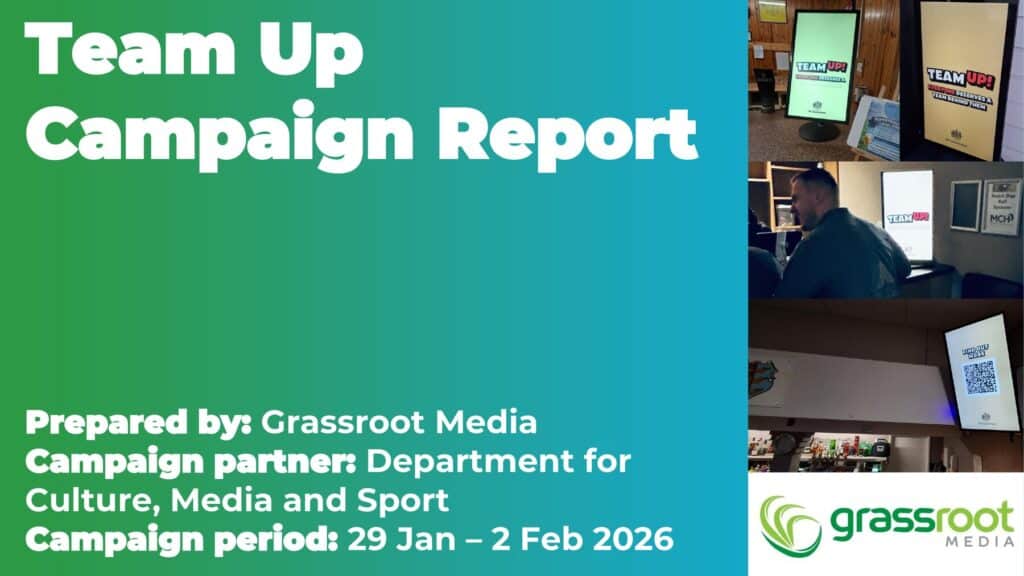
Explore the Team Up case study and evaluation.
For future campaigns, we can agree measures around the objective: recall, understanding, feedback or visits to a relevant resource. Campaign-specific response links and, where appropriate, QR codes can record visits. If the task is recruitment or service uptake, verified outcomes require the appropriate advertiser data and evaluation approach. We should establish that before launch.
Keep the shared club environment in mind
Clubs bring together people with different political views. Grassroot Media welcomes suitable non-partisan public-information campaigns and does not accept advertising promoting or opposing political parties, election candidates or referendum outcomes.
We consider the purpose and content of the campaign, including its linked destination. We may also decline issue-advocacy or campaigning material that is unsuitable for a shared club environment, could reasonably be understood as electoral or party-political campaigning, or risks implying that a host club endorses a contested position.
Read the full political advertising and public information policy.
Bring us into the planning conversation
If you are planning a public-information campaign, tell us who you need to reach, where they are and what you want them to understand or do. We can then assess whether our club environments fit, which formats would help and what evidence to build into the plan.
Campaign income helps support participating grassroots clubs, including agreed club payments or revenue share where applicable. That brings a practical benefit to grassroots sport alongside the advertising activity.
Government and public information
Plan the setting as carefully as the message.
Explore the full public-information proposition, policy and campaign evidence, or send us the audience, geography, timing, intended action and available budget.