

A practical guide for grassroots sports clubs
Why darts is worth thinking about
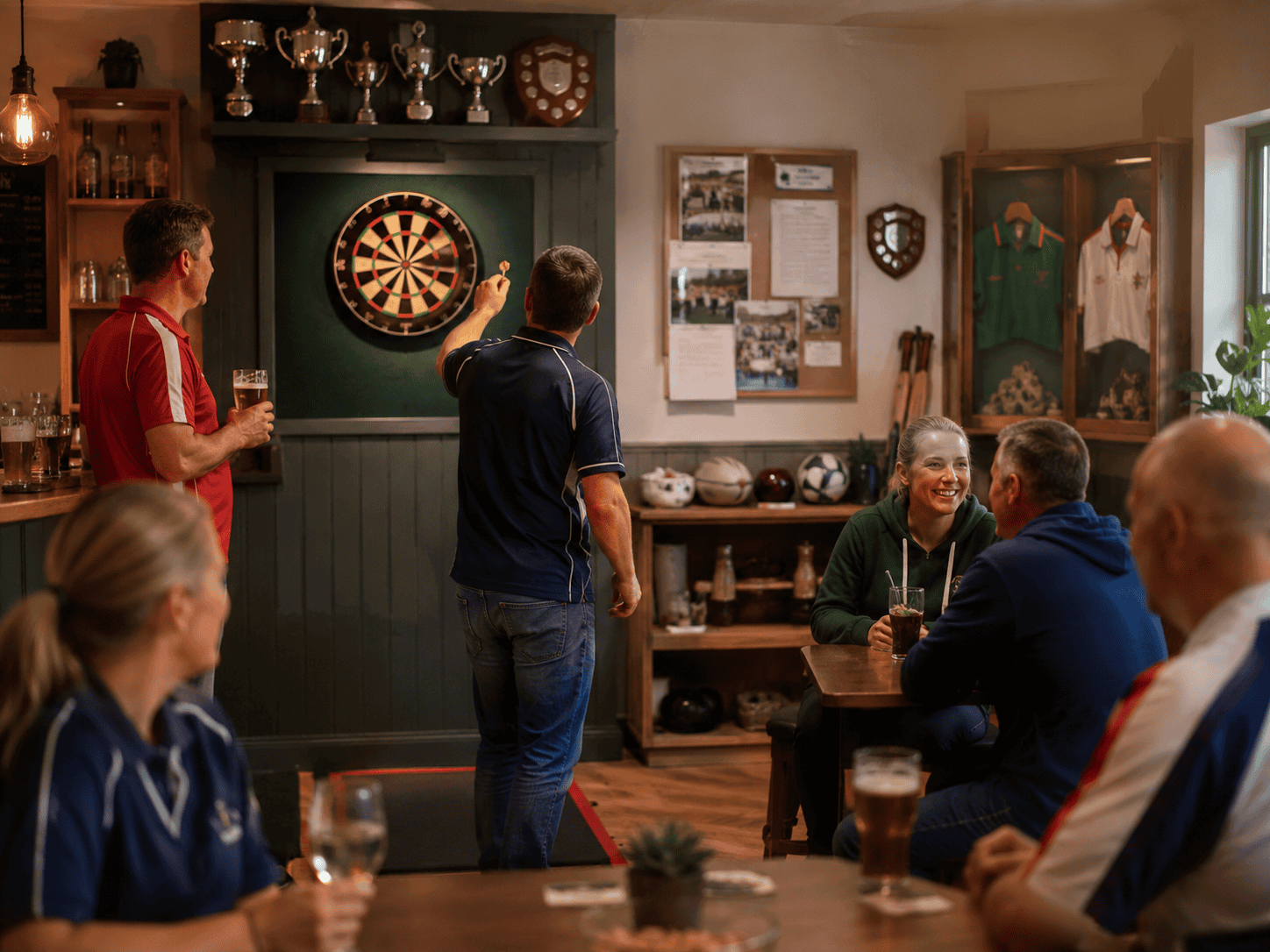
Most sports clubs work hard to make the clubhouse feel active beyond matchday. The more reasons members, players, families and local residents have to spend time there, the stronger the club becomes.
Darts can be a useful part of that.
It is relatively simple to introduce, familiar to a wide range of people, and works naturally in a clubhouse bar or social area. A good darts setup can help a club:
- keep people in the clubhouse longer after training or matches
- create an extra reason to visit on quieter evenings
- run low effort social events and internal competitions
- encourage members from different teams and sections to mix
- generate additional bar sales, food sales and small event income
For clubs with a suitable clubhouse space, darts can be one of the easier ways to add extra regular social activity without needing a major new facility or huge investment.
1. Start with the question: what do you want darts to do for the club?
Before buying a board or planning a team or league, it is worth being clear on the aim.
A club might want to:
- improve an existing darts area that has become tired or underused
- add a simple social activity for members after matches
- create a regular midweek reason for people to use the bar
- start a small internal league or knockout competition
- build an open community night that brings new people into the club
- support fundraising through entry fees, raffles or sponsored events
The right setup and level of investment will depend on which of these matters most.
2. The income opportunity
Darts can generate value in several ways. The biggest benefit is often not the entry fee for a competition, but the extra clubhouse activity it creates.
Bar sales
A darts night gives people a reason to stay for a drink, arrive earlier or visit the club on an evening that would otherwise be quiet.
A simple weekly format, even with modest numbers, can create a useful habit. If a club already opens the bar on certain evenings, darts can give that opening a clearer purpose.
Food sales
Clubs that offer simple food, snacks or pre ordered meals can build that into the event. A darts evening with a pie and pint offer, basket meals or a small buffet can make the night feel more complete and increase spend per head.
Entry fees
Internal competitions can use a small entry fee, either to create a prize pot, raise money for the club or support a specific cause.
Examples might include:
- £2 or £3 entry for a monthly knockout
- team entry for a club section challenge
- charity darts evening with a donation on the door
Local sponsorship
A local business may be willing to sponsor:
- the darts board area
- a monthly club darts night
- a yearly trophy
- an internal league table
- prizes for a finals evening
This can be a particularly easy sponsorship conversation because the offer is simple and visible.
Venue hire and private events
A well presented darts area can also help make the clubhouse more attractive for social hire, local business work do’s or informal group bookings.
3. Club darts formats that are easy to run
The best format is usually the one that the club can repeat without creating too much work.
Weekly social darts night
A relaxed evening where members can turn up and play. This is the simplest starting point and can help test interest before launching anything more formal.
Monthly knockout
Players enter on the night, the draw is made at the start and the winner is decided before closing. This creates a clear event without requiring a long league structure.
Team versus team challenge
Football first team versus reserves. Rugby forwards versus backs. Cricket Saturday side versus Sunday side. Bowls ladies versus men. These light hearted club rivalries can be an easy way to get people involved.
Inter section club competition
For multi sport or multi section clubs, darts can help different groups mix in the same social space.
Charity darts night
A one off fundraiser with entry donations, a raffle, small prizes and social promotion. This can work especially well where the club already supports a local charity or memorial fund.
Open community night
Where licensing and club rules allow, a regular open darts night can bring local residents into the clubhouse who may not otherwise visit.
4. What does a club need?
A strong darts offer does not need to be overcomplicated, but the basics matter.
A safe and suitable space
The board needs to be placed where players and spectators can use it safely without interfering with walkways, doors or bar queues. Clubs should think about:
- clear throwing space
- a sensible waiting and viewing area
- protection for walls and surrounding fixtures
- lighting that makes the board easy to see
- whether the area remains usable when the clubhouse is busy
A decent board and surround
An old board in a poor corner can make darts feel like an afterthought. A cleaner, more intentional setup tells members the club wants the activity to be used.
An oche or throwing line
This can be simple, but it should be clearly marked and consistent.
Scorekeeping
For basic social play, a chalkboard or whiteboard can be enough. For more regular use, digital scoring or connected systems may help make the activity easier and more attractive.
Darts for casual users
If the club wants newcomers to take part, it helps to have a basic set available behind the bar or in a managed cupboard.
5. How to make sure people actually use it
Installing a darts board is not the same as creating activity. Clubs that get value from darts usually give people a reason to notice it and try it.
Launch it properly
Do not quietly install a board and hope for the best. Announce it through:
- club social media
- WhatsApp groups
- email newsletters
- noticeboards
- clubhouse screens if you have them
Put a date in the diary immediately
The first darts night should be planned before the setup goes live. That gives the club something specific to promote.
Give someone ownership
A volunteer, bar manager, social secretary or committee member should be responsible for keeping the activity moving. It does not need to be a big job, but someone needs to make sure events are mentioned, draws are organised and equipment remains presentable.
Make it easy for teams to use
Team captains and coaches can be encouraged to suggest a casual darts session after training or after a match. This is especially helpful at clubs that already have groups of people staying for a drink.
Use simple incentives
Small prizes can help early events. They do not need to be expensive. A bar voucher, a sponsored bottle, a club shop item or a free entry next time can be enough.
6. A simple 30 day darts plan for your club
Week 1: Decide the purpose
Agree whether the aim is casual social play, a weekly club night, a league, a fundraising event or a combination.
Week 2: Sort the setup
Review your space, improve or install the darts area and confirm who will look after it.
Week 3: Promote the launch
Announce the new or refreshed darts offer and invite members to the first event.
Week 4: Run the first night
Keep it welcoming, take a few photos, ask attendees what they enjoyed and decide what should happen next.
7. Questions to ask before investing
- Do we have a safe and suitable place for a darts area?
- Will members actually be able to use it when the clubhouse is open?
- Are we trying to improve social atmosphere, generate bar income, fundraise or attract new visitors?
- Who will organise the first few events?
- How will we promote it?
- Do we want a simple setup, a more professional club installation or a connected scoring option?
8. Where darts may work best
Darts can be worth exploring in many sports clubs, but it may be especially relevant where:
- the club has a bar or social room that is already used after matches
- there are quiet weekday evenings the club would like to make more useful
- the club wants more non matchday reasons for members to attend
- the club already hosts social events but wants something repeatable and simple
- there is an existing darts board that could be upgraded and reactivated
9. The bigger opportunity
For clubs, darts is not just about putting up a board. It is about creating another reason for people to meet, stay, spend and feel part of the place.
A thriving clubhouse can support the wider health of a sports club. It can improve retention, strengthen volunteer relationships, make sponsors happier and create income that supports the playing side.
Darts will not be the answer for every club, but where the space and interest are there, it can be a practical and achievable addition.